Filters
Question type

Study Flashcards

The initial investment in a savings account in which interest is compounded continuously is $813.If the time required to double the amount is The initial investment in a savings account in which interest is compounded continuously is $813.If the time required to double the amount is   years, what is the annual rate? Round your answer to two decimal places. A) 7.49 % B) 7.70 % C) 13.34 % D) 6.29 % E) 8.89 % years, what is the annual rate? Round your answer to two decimal places.


A) 7.49 %
B) 7.70 %
C) 13.34 %
D) 6.29 %
E) 8.89 %

F) A) and C)
G) A) and B)

Correct Answer

verifed

verified

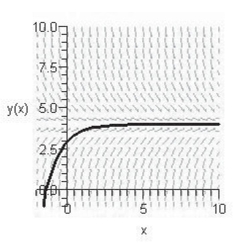
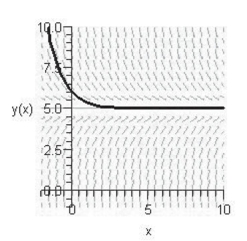
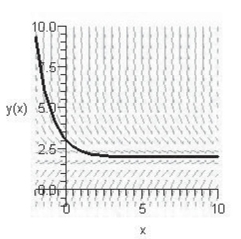
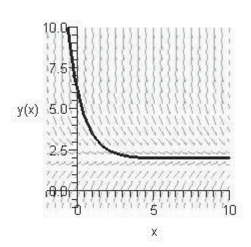
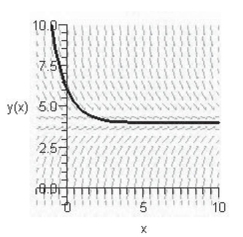
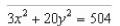
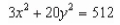
Sketch the slope field for the differential equation Sketch the slope field for the differential equation   and use the slope field to sketch the solution satisfying the condition   A)    B)    C)    D)    E)   and use the slope field to sketch the solution satisfying the condition Sketch the slope field for the differential equation   and use the slope field to sketch the solution satisfying the condition   A)    B)    C)    D)    E)


A) Sketch the slope field for the differential equation   and use the slope field to sketch the solution satisfying the condition   A)    B)    C)    D)    E)
B) Sketch the slope field for the differential equation   and use the slope field to sketch the solution satisfying the condition   A)    B)    C)    D)    E)
C) Sketch the slope field for the differential equation   and use the slope field to sketch the solution satisfying the condition   A)    B)    C)    D)    E)
D) Sketch the slope field for the differential equation   and use the slope field to sketch the solution satisfying the condition   A)    B)    C)    D)    E)
E) Sketch the slope field for the differential equation   and use the slope field to sketch the solution satisfying the condition   A)    B)    C)    D)    E)

F) C) and D)
G) B) and C)

Correct Answer

verifed

verified

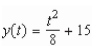
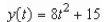
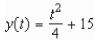
Find the particular solution of the differential equation Find the particular solution of the differential equation   that satisfies the initial condition   is the general solution. A)    B)    C)    D)    E)   that satisfies the initial condition Find the particular solution of the differential equation   that satisfies the initial condition   is the general solution. A)    B)    C)    D)    E)   is the general solution.


A) Find the particular solution of the differential equation   that satisfies the initial condition   is the general solution. A)    B)    C)    D)    E)
B) Find the particular solution of the differential equation   that satisfies the initial condition   is the general solution. A)    B)    C)    D)    E)
C) Find the particular solution of the differential equation   that satisfies the initial condition   is the general solution. A)    B)    C)    D)    E)
D) Find the particular solution of the differential equation   that satisfies the initial condition   is the general solution. A)    B)    C)    D)    E)
E) Find the particular solution of the differential equation   that satisfies the initial condition   is the general solution. A)    B)    C)    D)    E)

F) B) and E)
G) A) and B)

Correct Answer

verifed

verified

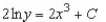
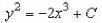
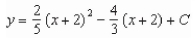
Which of the following is a solution of the differential equation Which of the following is a solution of the differential equation   A)    B)    C)    D)    E)


A) Which of the following is a solution of the differential equation   A)    B)    C)    D)    E)
B) Which of the following is a solution of the differential equation   A)    B)    C)    D)    E)
C) Which of the following is a solution of the differential equation   A)    B)    C)    D)    E)
D) Which of the following is a solution of the differential equation   A)    B)    C)    D)    E)
E) Which of the following is a solution of the differential equation   A)    B)    C)    D)    E)

F) B) and D)
G) A) and D)

Correct Answer

verifed

verified

The rate of change of N is proportional to N.When The rate of change of N is proportional to N.When   and when   What is the value of N when   Round your answer to three decimal places. A) 2,129.520 B) 2,099.520 C) 2,049.520 D) 491.383 E) 262,440.000 and when The rate of change of N is proportional to N.When   and when   What is the value of N when   Round your answer to three decimal places. A) 2,129.520 B) 2,099.520 C) 2,049.520 D) 491.383 E) 262,440.000 What is the value of N when The rate of change of N is proportional to N.When   and when   What is the value of N when   Round your answer to three decimal places. A) 2,129.520 B) 2,099.520 C) 2,049.520 D) 491.383 E) 262,440.000 Round your answer to three decimal places.


A) 2,129.520
B) 2,099.520
C) 2,049.520
D) 491.383
E) 262,440.000

F) A) and B)
G) A) and C)

Correct Answer

verifed

verified

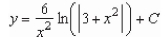
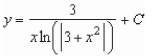
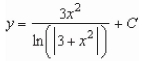
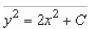
Solve the differential equation. Solve the differential equation.   A)    B)    C)    D)    E)


A) Solve the differential equation.   A)    B)    C)    D)    E)
B) Solve the differential equation.   A)    B)    C)    D)    E)
C) Solve the differential equation.   A)    B)    C)    D)    E)
D) Solve the differential equation.   A)    B)    C)    D)    E)
E) Solve the differential equation.   A)    B)    C)    D)    E)

F) B) and C)
G) C) and D)

Correct Answer

verifed

verified

Suppose that the population (in millions) of a Egypt in 2007 is 80.3 and that expected Suppose that the population (in millions)  of a Egypt in 2007 is 80.3 and that expected   continuous annual rate of change of the population is   The exponential growth model for the population by letting   corresponds to 2000 is   Use the model to predict the Population of the country in 2013.Round your answer to two decimal places. A) 83.08 million B) 87.42 million C) 90.45 million D) 88.92 million E) 81.68 million continuous annual rate of change of the population is Suppose that the population (in millions)  of a Egypt in 2007 is 80.3 and that expected   continuous annual rate of change of the population is   The exponential growth model for the population by letting   corresponds to 2000 is   Use the model to predict the Population of the country in 2013.Round your answer to two decimal places. A) 83.08 million B) 87.42 million C) 90.45 million D) 88.92 million E) 81.68 million The exponential growth model for the population by letting Suppose that the population (in millions)  of a Egypt in 2007 is 80.3 and that expected   continuous annual rate of change of the population is   The exponential growth model for the population by letting   corresponds to 2000 is   Use the model to predict the Population of the country in 2013.Round your answer to two decimal places. A) 83.08 million B) 87.42 million C) 90.45 million D) 88.92 million E) 81.68 million corresponds to 2000 is Suppose that the population (in millions)  of a Egypt in 2007 is 80.3 and that expected   continuous annual rate of change of the population is   The exponential growth model for the population by letting   corresponds to 2000 is   Use the model to predict the Population of the country in 2013.Round your answer to two decimal places. A) 83.08 million B) 87.42 million C) 90.45 million D) 88.92 million E) 81.68 million Use the model to predict the Population of the country in 2013.Round your answer to two decimal places.


A) 83.08 million
B) 87.42 million
C) 90.45 million
D) 88.92 million
E) 81.68 million

F) A) and E)
G) None of the above

Correct Answer

verifed

verified

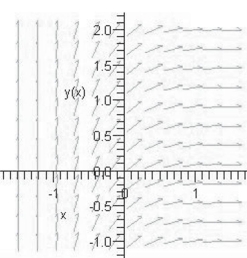
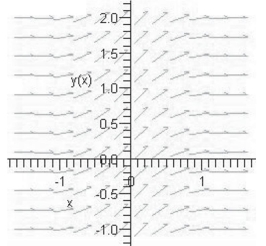
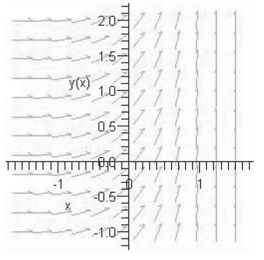
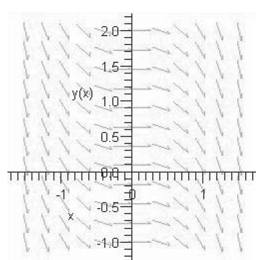
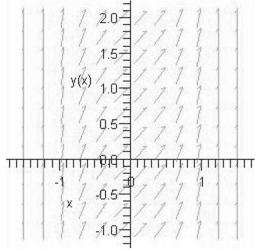
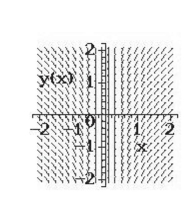
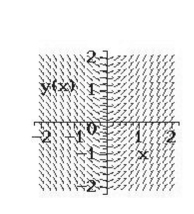
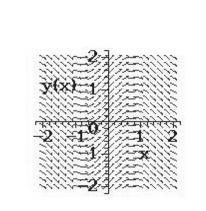
Identify the slope field of the differential equation Identify the slope field of the differential equation   A)    B)    C)    D)    E)


A) Identify the slope field of the differential equation   A)    B)    C)    D)    E)
B) Identify the slope field of the differential equation   A)    B)    C)    D)    E)
C) Identify the slope field of the differential equation   A)    B)    C)    D)    E)
D) Identify the slope field of the differential equation   A)    B)    C)    D)    E)
E) Identify the slope field of the differential equation   A)    B)    C)    D)    E)

F) A) and D)
G) A) and C)

Correct Answer

verifed

verified

Find the function Find the function   passing through the point   with the first derivative   A)    B)    C)    D)    E)   passing through the point Find the function   passing through the point   with the first derivative   A)    B)    C)    D)    E)   with the first derivative Find the function   passing through the point   with the first derivative   A)    B)    C)    D)    E)


A) Find the function   passing through the point   with the first derivative   A)    B)    C)    D)    E)
B) Find the function   passing through the point   with the first derivative   A)    B)    C)    D)    E)
C) Find the function   passing through the point   with the first derivative   A)    B)    C)    D)    E)
D) Find the function   passing through the point   with the first derivative   A)    B)    C)    D)    E)
E) Find the function   passing through the point   with the first derivative   A)    B)    C)    D)    E)

F) All of the above
G) A) and E)

Correct Answer

verifed

verified

Use the differential equation Use the differential equation   and its slope field to find the slope at the point   A) 32 B) 1 C) 8 D) 64 E) 16 and its slope field to find the slope at the point Use the differential equation   and its slope field to find the slope at the point   A) 32 B) 1 C) 8 D) 64 E) 16


A) 32
B) 1
C) 8
D) 64
E) 16

F) A) and D)
G) D) and E)

Correct Answer

verifed

verified

B

Write and solve the differential equation that models the following verbal statement: The rate of change of Write and solve the differential equation that models the following verbal statement: The rate of change of   with respect to   is proportional to   A)    B)    C)    D)    E)   with respect to Write and solve the differential equation that models the following verbal statement: The rate of change of   with respect to   is proportional to   A)    B)    C)    D)    E)   is proportional to Write and solve the differential equation that models the following verbal statement: The rate of change of   with respect to   is proportional to   A)    B)    C)    D)    E)


A) Write and solve the differential equation that models the following verbal statement: The rate of change of   with respect to   is proportional to   A)    B)    C)    D)    E)
B) Write and solve the differential equation that models the following verbal statement: The rate of change of   with respect to   is proportional to   A)    B)    C)    D)    E)
C) Write and solve the differential equation that models the following verbal statement: The rate of change of   with respect to   is proportional to   A)    B)    C)    D)    E)
D) Write and solve the differential equation that models the following verbal statement: The rate of change of   with respect to   is proportional to   A)    B)    C)    D)    E)
E) Write and solve the differential equation that models the following verbal statement: The rate of change of   with respect to   is proportional to   A)    B)    C)    D)    E)

F) A) and B)
G) A) and D)

Correct Answer

verifed

verified

Write and solve the differential equation that models the following verbal statement. Evaluate the solution at the specified value of the independent variable, rounding your answer to four Decimal places: The rate of change of Write and solve the differential equation that models the following verbal statement. Evaluate the solution at the specified value of the independent variable, rounding your answer to four Decimal places: The rate of change of   is proportional to   .When   and when   What is the Value of   A)    B)    C)    D)    E)   is proportional to Write and solve the differential equation that models the following verbal statement. Evaluate the solution at the specified value of the independent variable, rounding your answer to four Decimal places: The rate of change of   is proportional to   .When   and when   What is the Value of   A)    B)    C)    D)    E)   .When Write and solve the differential equation that models the following verbal statement. Evaluate the solution at the specified value of the independent variable, rounding your answer to four Decimal places: The rate of change of   is proportional to   .When   and when   What is the Value of   A)    B)    C)    D)    E)   and when Write and solve the differential equation that models the following verbal statement. Evaluate the solution at the specified value of the independent variable, rounding your answer to four Decimal places: The rate of change of   is proportional to   .When   and when   What is the Value of   A)    B)    C)    D)    E)   What is the Value of Write and solve the differential equation that models the following verbal statement. Evaluate the solution at the specified value of the independent variable, rounding your answer to four Decimal places: The rate of change of   is proportional to   .When   and when   What is the Value of   A)    B)    C)    D)    E)


A) Write and solve the differential equation that models the following verbal statement. Evaluate the solution at the specified value of the independent variable, rounding your answer to four Decimal places: The rate of change of   is proportional to   .When   and when   What is the Value of   A)    B)    C)    D)    E)
B) Write and solve the differential equation that models the following verbal statement. Evaluate the solution at the specified value of the independent variable, rounding your answer to four Decimal places: The rate of change of   is proportional to   .When   and when   What is the Value of   A)    B)    C)    D)    E)
C) Write and solve the differential equation that models the following verbal statement. Evaluate the solution at the specified value of the independent variable, rounding your answer to four Decimal places: The rate of change of   is proportional to   .When   and when   What is the Value of   A)    B)    C)    D)    E)
D) Write and solve the differential equation that models the following verbal statement. Evaluate the solution at the specified value of the independent variable, rounding your answer to four Decimal places: The rate of change of   is proportional to   .When   and when   What is the Value of   A)    B)    C)    D)    E)
E) Write and solve the differential equation that models the following verbal statement. Evaluate the solution at the specified value of the independent variable, rounding your answer to four Decimal places: The rate of change of   is proportional to   .When   and when   What is the Value of   A)    B)    C)    D)    E)

F) A) and B)
G) None of the above

Correct Answer

verifed

verified

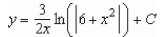
Use integration to find a general solution of the differential equation Use integration to find a general solution of the differential equation   A)    B)    C)    D)    E)


A) Use integration to find a general solution of the differential equation   A)    B)    C)    D)    E)
B) Use integration to find a general solution of the differential equation   A)    B)    C)    D)    E)
C) Use integration to find a general solution of the differential equation   A)    B)    C)    D)    E)
D) Use integration to find a general solution of the differential equation   A)    B)    C)    D)    E)
E) Use integration to find a general solution of the differential equation   A)    B)    C)    D)    E)

F) A) and D)
G) B) and E)

Correct Answer

verifed

verified

B

Suppose that the population (in millions) of Paraguay in 2007 was 6.7 and that the expected continuous annual rate of change of the population is 0.024.Find the exponential growth Model Suppose that the population (in millions)  of Paraguay in 2007 was 6.7 and that the expected continuous annual rate of change of the population is 0.024.Find the exponential growth Model   for the population by letting   correspond to 2000.Round your answer to four Decimal places. A)    B)    C)    D)    E)   for the population by letting Suppose that the population (in millions)  of Paraguay in 2007 was 6.7 and that the expected continuous annual rate of change of the population is 0.024.Find the exponential growth Model   for the population by letting   correspond to 2000.Round your answer to four Decimal places. A)    B)    C)    D)    E)   correspond to 2000.Round your answer to four Decimal places.


A) Suppose that the population (in millions)  of Paraguay in 2007 was 6.7 and that the expected continuous annual rate of change of the population is 0.024.Find the exponential growth Model   for the population by letting   correspond to 2000.Round your answer to four Decimal places. A)    B)    C)    D)    E)
B) Suppose that the population (in millions)  of Paraguay in 2007 was 6.7 and that the expected continuous annual rate of change of the population is 0.024.Find the exponential growth Model   for the population by letting   correspond to 2000.Round your answer to four Decimal places. A)    B)    C)    D)    E)
C) Suppose that the population (in millions)  of Paraguay in 2007 was 6.7 and that the expected continuous annual rate of change of the population is 0.024.Find the exponential growth Model   for the population by letting   correspond to 2000.Round your answer to four Decimal places. A)    B)    C)    D)    E)
D) Suppose that the population (in millions)  of Paraguay in 2007 was 6.7 and that the expected continuous annual rate of change of the population is 0.024.Find the exponential growth Model   for the population by letting   correspond to 2000.Round your answer to four Decimal places. A)    B)    C)    D)    E)
E) Suppose that the population (in millions)  of Paraguay in 2007 was 6.7 and that the expected continuous annual rate of change of the population is 0.024.Find the exponential growth Model   for the population by letting   correspond to 2000.Round your answer to four Decimal places. A)    B)    C)    D)    E)

F) C) and D)
G) A) and B)

Correct Answer

verifed

verified

The The   a half-life of 5,715 years.After 2,000 years, a sample of the isotope is reduced to 1.2 grams.What was the initial size of the sample (in grams) ? How much will Remain after 20,000 years (i.e., after another 18000 years) ? Round your answers to four decimal Places. A) 1.0706 , 0.0947 B) 2.4471 , 0.2164 C) 1.5294 , 0.1352 D) 2.1412 , 0.1893 E) 1.9883 , 0.1758 a half-life of 5,715 years.After 2,000 years, a sample of the isotope is reduced to 1.2 grams.What was the initial size of the sample (in grams) ? How much will Remain after 20,000 years (i.e., after another 18000 years) ? Round your answers to four decimal Places.


A) 1.0706 , 0.0947
B) 2.4471 , 0.2164
C) 1.5294 , 0.1352
D) 2.1412 , 0.1893
E) 1.9883 , 0.1758

F) None of the above
G) C) and E)

Correct Answer

verifed

verified

The initial investment in a savings account in which interest is compounded continuously is $604.If the time required to double the amount is The initial investment in a savings account in which interest is compounded continuously is $604.If the time required to double the amount is   years, what is the amount after 15 years? Round your answer to the nearest cent. A) $1,917.58 B) $1,804.46 C) $1,907.37 D) $1,404.46 E) $8,278.18 years, what is the amount after 15 years? Round your answer to the nearest cent.


A) $1,917.58
B) $1,804.46
C) $1,907.37
D) $1,404.46
E) $8,278.18

F) A) and D)
G) C) and E)

Correct Answer

verifed

verified

Find the time (in years) necessary for 1,000 to double if it is invested at a rate 6% compounded continuously.Round your answer to two decimal places.


A) 1.16 years
B) 11.55 years
C) 1.39 years
D) 11.90 years
E) 11.58 years

F) A) and E)
G) A) and D)

Correct Answer

verifed

verified

B

Solve the differential equation. Solve the differential equation.   A)    B)    C)    D)    E)


A) Solve the differential equation.   A)    B)    C)    D)    E)
B) Solve the differential equation.   A)    B)    C)    D)    E)
C) Solve the differential equation.   A)    B)    C)    D)    E)
D) Solve the differential equation.   A)    B)    C)    D)    E)
E) Solve the differential equation.   A)    B)    C)    D)    E)

F) C) and E)
G) C) and D)

Correct Answer

verifed

verified

Use integration to find a general solution of the differential equation. Use integration to find a general solution of the differential equation.   A)    B)    C)    D)    E)


A) Use integration to find a general solution of the differential equation.   A)    B)    C)    D)    E)
B) Use integration to find a general solution of the differential equation.   A)    B)    C)    D)    E)
C) Use integration to find a general solution of the differential equation.   A)    B)    C)    D)    E)
D) Use integration to find a general solution of the differential equation.   A)    B)    C)    D)    E)
E) Use integration to find a general solution of the differential equation.   A)    B)    C)    D)    E)

F) B) and E)
G) D) and E)

Correct Answer

verifed

verified

Select from the choices below the slope field for the differential equation. Select from the choices below the slope field for the differential equation.   A)    B)    C)    D) none of the above


A) Select from the choices below the slope field for the differential equation.   A)    B)    C)    D) none of the above
B) Select from the choices below the slope field for the differential equation.   A)    B)    C)    D) none of the above
C) Select from the choices below the slope field for the differential equation.   A)    B)    C)    D) none of the above
D) none of the above

E) None of the above
F) B) and C)

Correct Answer

verifed

verified

Showing 1 - 20 of 46

Related Exams

Show Answer